
Pflugerville Asphalt Contractor
(737) 388-2058

Asphalt Contractor in Pflugerville TX
A dependable paved surface makes a difference when you're heading to work, welcoming customers, or simply enjoying your property. We provide asphalt paving services, helping homeowners and businesses improve entrances, parking areas, and aging pavement. Our approach combines careful planning, practical recommendations, and attention to Central Texas conditions so your investment supports everyday convenience and lasting curb appeal.
What We Offer
We handle residential and commercial paving projects, including driveway installations, parking lot construction, repairs, and resurfacing. Our recommendations consider existing pavement conditions, drainage patterns, and vehicle demands. We aim to make property improvements straightforward while delivering attractive, functional surfaces.

Contact Us
Asphalt Driveway Paving
Give your home an entrance that feels inviting and easy to navigate. We install driveways with attention to foundation preparation, proper slope, and vehicle access. Whether you're replacing deteriorated pavement or creating additional parking, we tailor recommendations to your property.
Parking Lot Paving
A thoughtfully designed parking lot helps visitors reach your business without unnecessary confusion. We consider traffic circulation, entrances, and water runoff when planning commercial surfaces. Our paving solutions support convenient parking while helping businesses maintain an organized, professional appearance.
Asphalt Repair
Potholes, spreading cracks, and broken pavement edges can affect both appearance and accessibility. We assess damaged sections to determine appropriate patching or repair methods. Our goal is to address troublesome areas while considering underlying conditions that may contribute to deterioration.
Asphalt Resurfacing
When existing pavement retains a suitable foundation, resurfacing may offer an alternative to complete replacement. We evaluate surface wear, drainage, and structural concerns before discussing overlays. This process can refresh aging areas and improve driving comfort without unnecessary reconstruction.
Asphalt Paving Near Me
Whether you're updating your home's driveway or improving a busy commercial parking area, we're ready to help you explore practical paving options. We take time to understand your property's condition, discuss preparation requirements, and explain potential solutions. From new installations to targeted repairs and resurfacing, our focus is on improvements that fit your needs. Contact our team today to request a personalized estimate for your project.
Why Blackland Prairie Clay Changes the Paving Decision
Large parts of the surrounding region lie in the Blackland Prairie, where dense clay soils can shrink during dry spells and swell after absorbing moisture. The local fire district's hazard assessment also identifies expansive soils as a concern. Soil conditions vary, making a site-specific base assessment important.
Look for the clues that explain the failure:
- Long cracks that return: The crack may reflect movement below the surface, not merely age in the top layer.
- A depressed tire path: Repeated loading, inadequate compaction, or weakened base material may be responsible.
- Broken shoulders: Turning wheels can damage edges with little lateral support, particularly beside soft landscaping.
- Wet spots near sprinklers: An irrigation leak or poor grading may repeatedly saturate the soil underneath.
- Loose aggregate at entrances: Braking and turning concentrate force where vehicles leave the street or enter a parking area.
- Heat-related marks: Fresh asphalt can be vulnerable to sharp stationary tire turns and concentrated loads during hot weather.
Drainage deserves its own inspection. Even gentle slopes can channel water toward a garage or neighbor. Properties near Gilleland Creek may also need separate consideration of mapped floodplain conditions. Ordinary paving work cannot solve regional flooding or replace required drainage engineering.
Before and After Asphalt Paving
Before: Imagine a narrow access lane behind a small retail building, where delivery drivers swing around a dumpster enclosure. The pavement looks reasonably dark from a distance, but a shallow wheel rut holds water after thunderstorms. Near the curb, thin cracks have widened into broken edges. The property manager has considered sealcoating because the surface looks tired, yet the repeated ponding suggests that cosmetic treatment alone would leave the main problem untouched.
An assessment reveals the questions that matter: Is the base still firm? Where should runoff leave the lane? Can trucks turn without crossing an unsupported edge? A contractor would measure elevations, inspect failed sections, and check for underground utilities before proposing excavation. If the supporting material has softened, a simple overlay may be the wrong investment.
After: In this hypothetical reconstruction, damaged pavement is cut out and unsuitable material removed. The crew rebuilds the affected base in compacted lifts, adjusts the surface grade within approved drainage limits, and places a suitable asphalt mix. The finished lane provides a more consistent path for deliveries, with a defined edge and less opportunity for ordinary rainfall to collect in the old rut.
The property manager receives instructions about reopening traffic, protecting fresh pavement from stationary tire turns, and monitoring water movement during future storms. The surface will still need occasional crack repairs and maintenance, especially where heavy vehicles brake or turn. A more uniform appearance is welcome, but the important improvement is the attention paid to support and drainage beneath it.
This example is illustrative, not a report of a completed customer project. Actual results depend on the property's pavement design, soils, vehicle loads, utility constraints, and any offsite drainage issues that remain unresolved. Even properly installed asphalt cannot eliminate flooding or prevent every future crack over many years of use.
Asphalt Driveway Paving
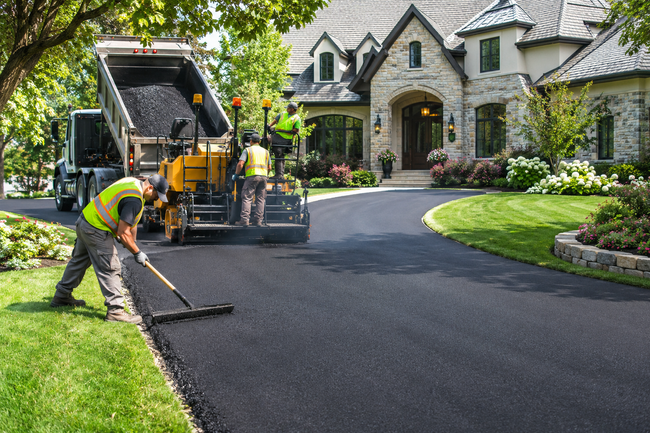
Our asphalt driveway paving services help homeowners create attractive, functional entrances designed for everyday convenience. Whether you're installing a driveway for a new home or replacing pavement that has become uneven and worn, we provide solutions tailored to your property. We consider Central Texas clay soils, summer heat, drainage patterns, and vehicle traffic when planning each installation. Our approach emphasizes proper grading, dependable base preparation, and smooth surface finishing to support lasting performance. From initial planning to discussing maintenance needs, we're here to make your project easier. Contact us today to request a personalized driveway paving estimate.
Parking Lot Paving
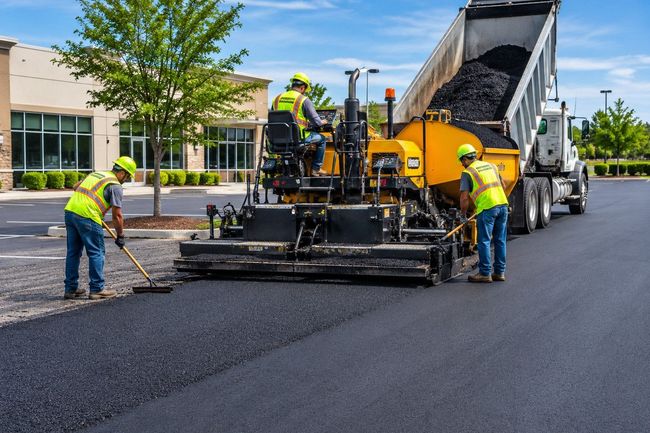
Our parking lot paving services help commercial property owners create durable, organized spaces that support customers, employees, and daily business activities. Whether you're developing a new retail location or replacing deteriorated pavement, we focus on parking lot paving practical layouts, stable foundations, and effective drainage. We consider delivery access, turning areas, parking capacity, and Central Texas weather when discussing each project. Our approach emphasizes thoughtful site preparation and smooth surfaces that accommodate regular vehicle traffic. From neighborhood shopping centers to office properties, we're ready to help improve accessibility and curb appeal. Contact us today for a personalized paving estimate.
Asphalt Repair
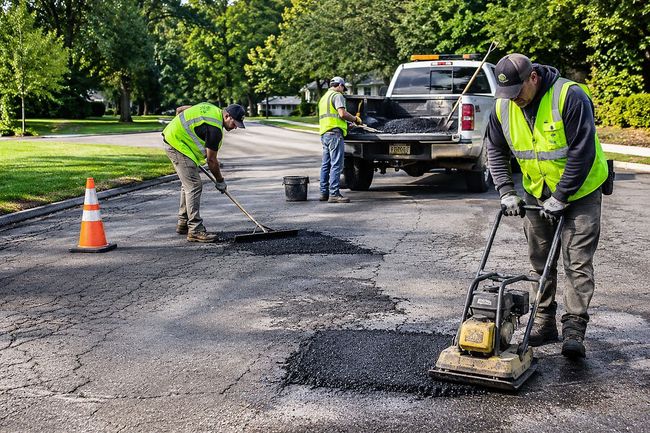
Our asphalt repair services help homeowners and businesses address pavement damage before it disrupts daily activities. From potholes and spreading cracks to crumbling edges and uneven patches, we provide practical solutions for deteriorating surfaces. Central Texas heat, shifting clay soils, and sudden rainfall can contribute to pavement problems, making timely repairs important. We evaluate damaged areas to discuss appropriate treatments, including crack filling, patching, and localized surface replacement. Our goal is to improve driving comfort, restore functionality, and help protect your existing pavement investment. Contact us today to discuss your concerns and request a personalized repair estimate.
Asphalt Resurfacing
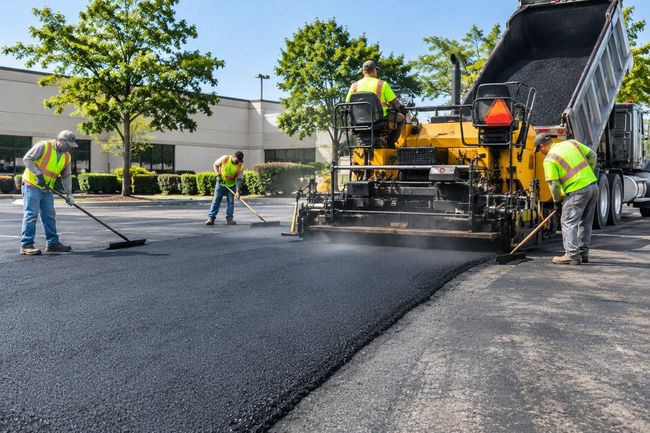
Our asphalt resurfacing services help homeowners and businesses renew aging pavement without automatically requiring complete replacement. When an existing driveway or parking lot has a stable foundation, applying a fresh overlay may improve appearance, surface texture, and driving comfort. We examine cracks, drainage concerns, and structural conditions to determine whether resurfacing is appropriate. Central Texas sunshine, shifting soils, and seasonal rainfall make careful evaluation especially important. Our approach emphasizes proper preparation and practical recommendations suited to your property's needs. Contact us today to discuss your pavement's condition and request a personalized resurfacing estimate.
Asphalt Services for Different Property Needs
An existing pavement's condition should determine the treatment. A fresh wearing course may be sensible for an otherwise solid lot; a soft foundation needs more than an attractive new top layer.
| Service | Best Fit | What It Addresses | What It Doesn't Solve |
|---|---|---|---|
| New asphalt installation | Planned driveways, private roads, parking areas | Builds a surface for defined traffic and drainage | Unresolved underground or offsite problems |
| Driveway replacement | Extensively failed residential pavement | Allows removal and rebuilding of weak layers | Future damage from poor maintenance or water intrusion |
| Asphalt resurfacing | Candice | Renews the traveling surface | Base failure or widespread structural movement |
| Pothole and edge repai | Localized defects and raveling | Restores selected areas | Deterioration across the entire site |
| Crack filling and sealcoating | Preventive care for sound pavement | Limits surface exposure and addresses suitable cracks | Deep depressions, weak foundations, drainage defects |
What Our Paving Process Looks Like
Every job begins with a decision about the existing material.
- Document the site. Measure the area, record drainage patterns, assess cracks and movement, and identify restrictions from gates, curbs, utilities, or occupied businesses.
- Choose the treatment. Explain whether the pavement is suited to repair, overlay, or reconstruction. Identify any base work, traffic accommodation, or specialized design needed.
- Confirm approvals and access. Establish applicable permits, utility locates, staging areas, and a plan for residents or visitors during construction.
- Prepare supporting layers. Remove unsuitable material where included, shape the grade, and compact the specified aggregate base. Soft areas discovered during excavation should be documented before extra work proceeds.
- Place the material. Deliver hot-mix asphalt at an appropriate working temperature, spread it at the planned depth, and compact it using equipment matched to the job.
- Finish and review. Check transitions, edge support, visible drainage, and cleanup. Provide instructions for opening the area to traffic and caring for the new finish.
An overlay and reconstruction require different preparation; written scopes should say which is proposed.
Comparing Resurfacing and Complete Reconstruction
| Question | Resurfacing / Overlay | Full Reconstruction |
|---|---|---|
| Is the existing base kept? | Usually, when sound | No, where failed materials are removed |
| What happens to finished elevation? | Typically rises unless milling offsets it | Can be reset to the approved design |
| How much site disruption occurs? | Often less | Usually more excavation and hauling |
| When is it unsuitable? | Extensive rutting, unstable base, severe structural cracking | May be unnecessary for isolated surface wear |
Why this matters: An overlay can be a smart investment, but only if the underlying surface can support it. Ask how existing cracks, low spots, and transitions will be handled.
2026 Asphalt Paving Costs in Pflugerville
Demolition, base condition, thickness, and hauling influence the price. These broad 2026 Texas and Austin-area planning ranges are intended for preliminary budgeting, not as a local contractor price list.
| Work Type | Estimated Cost per Sq. Ft. | Example for 650 Sq. Ft. |
|---|---|---|
| New asphalt installation | 7–13 | 4,550–8,450 |
| Remove and replace existing pavement | 8–15 | 5,200–9,750 |
| Overlay on suitable existing pavement | 3–7 | 1,950–4,550 |
| Localized asphalt repair | 2–5 for applicable repair area | Depends on damaged area and minimum charges |
Clay remediation, drainage, and difficult access may raise costs. Commercial estimates may also include striping, inlets, and traffic control. When comparing bids, request a breakdown of removal, disposal, aggregate base, compacted asphalt thickness, tie-ins, site restoration, and any excluded work. The most useful estimate explains what you're paying for beneath the finished surface.
Permits, Utility Safety, and Contractor Verification
The City of Pflugerville regulates work within public rights-of-way through Chapter 96 of its ordinances. Excavation, certain street openings, and lane closures generally require the applicable right-of-way permit unless a stated exception applies. Commercial development or changes affecting public infrastructure may trigger additional site or engineering review.
A private driveway repair does not automatically require the same approval as opening a public street. Owners should confirm their specific scope with Planning and Development Services, which provides an online permit portal and can be contacted at (512) 990-6300.
For digging, Texas811 requires notification at least two business days before excavation, excluding weekends and holidays. The excavator should verify affected utility responses, and privately owned lines may need separate locating.
Check company details, insurance, relevant experience, and the written scope. Texas does not issue a general statewide specialty license solely for routine asphalt driveway paving, so check municipal requirements and qualifications rather than trusting a vague claim of being “state licensed.”
Asphalt Paving Services FAQs
Q: Can asphalt perform well over expansive Central Texas clay?
Yes, but successful performance depends on pavement design and support, not asphalt alone. Clay that changes volume with moisture can affect the base and finished surface. The contractor should assess drainage, soft spots, compaction, and suitable aggregate thickness for the anticipated loads. Some sites require additional stabilization or engineered recommendations. Ask what evidence supports the proposed base design and how water will be managed around pavement edges.
Q: Is asphalt resurfacing worth it when the driveway already has cracks?
Sometimes. Fine surface cracking or general wear may be compatible with an overlay after appropriate preparation and repairs. Interconnected cracking, repeated depressions, and soft spots are different because they suggest inadequate support. New asphalt can reflect underlying defects if the cause remains. Ask about cracking patterns, possible milling, and the expected life of the proposed fix.
Q: Do I need a permit to repave a driveway in Pflugerville?
The answer depends on where the work occurs and whether it changes an entrance, drainage, public right-of-way, or approved development layout. The city's right-of-way rules cover certain excavation and lane closures, while applicable development work can require other reviews. Do not assume that every private repair needs a public-street permit, or that work touching public infrastructure is exempt. Confirm requirements with the permitting office and have the contractor identify who submits plans and coordinates inspections.
Q: Can sealcoating prevent potholes from developing?
Sealcoating can play a role in maintaining sound pavement, but it is not structural reinforcement. Potholes often begin when water, traffic, and weakening support combine, so filling and rebuilding damaged areas may be necessary. Open cracks should be assessed and treated appropriately before any maintenance coat. Timing depends on the pavement's condition and the product requirements, not simply the number of years since installation. Keeping drainage paths clear is just as important as the appearance of the finish.
Q: How should a business plan paving without closing its entire parking lot?
Ask the contractor to evaluate phasing, delivery access, pedestrian routes, accessible parking, and emergency-vehicle circulation. Dividing work into sections may allow part of a lot to remain available, although some sites cannot operate safely during paving. New markings, barriers, curing restrictions, and inspection requirements should be included in the schedule. The best plan balances access with enough uninterrupted space for safe, proper compaction.